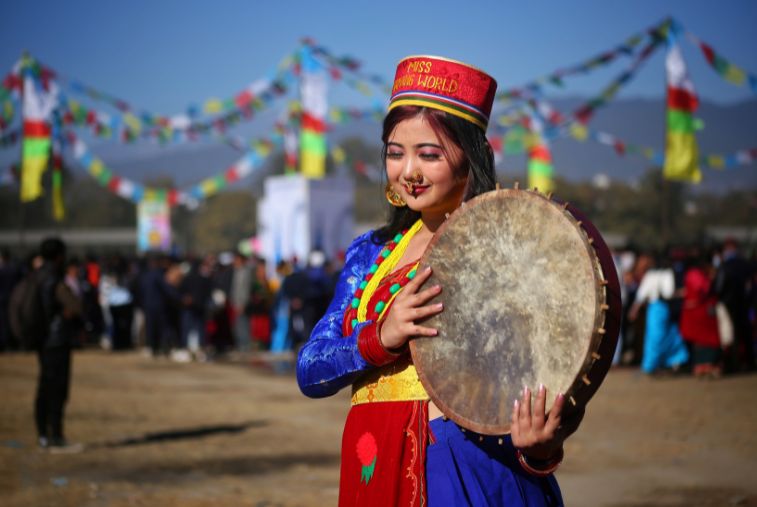
Himachal Pradesh’s cultural identity is shaped by its diverse communities, languages, and age-old traditions. From the Hindu heartlands of Kullu and Chamba to the Tibetan Buddhist regions of Lahaul, Spiti, and Dharamshala, the state’s heritage is a blend of ritual, folklore, and artistry that remains deeply woven into daily life.
| Month |
Name of the Festival |
Date |
| October |
Kullu Dussehra |
15th October 2026 |
| February |
Losar |
18th - 20th February 2026 |
| January |
Sazo Festival |
14th January 2026 |
| July |
Minjar Festival |
26th July 2026 |
| November |
Lavi Fair |
11th - 14th November 2026 |
5 Festivals That Capture the Himachali Spirit
- Kullu Dussehra: Celebrated at Dhalpur Maidan, Kullu Dussehra begins when the rest of the country has completed the festival. Hundreds of village deities are carried in elaborate processions, accompanied by music, dance, and ceremonial rituals that trace their origins back centuries.
- Losar: Observed by the Tibetan Buddhist communities of Lahaul, Spiti, Kinnaur, and McLeod Ganj, Losar marks the beginning of the Tibetan calendar year. Monasteries hold prayer ceremonies, masked dances, and purification rituals symbolising renewal and good fortune.
- Sazo Festival: Celebrated in Kinnaur, Sazo marks the symbolic return of local deities to the celestial realm during winter. Families offer prayers at home and in village shrines, while traditional dances such as Shunto and Chihara reflect gratitude and seasonal transition.
- Minjar Festival: Held over eight days in the Chamba Valley, Minjar commemorates both the harvest season and a historic victory of the Chamba rulers. Silk tassels representing maize shoots are offered to the Ravi River, alongside folk performances, fairs, and sporting events.
- Lavi Fair: Hosted in Rampur since the 17th century, the Lavi Fair recalls Himachal’s trading ties with Tibet. The marketplace comes alive with woollens, spices, horses, and handicrafts, while cultural performances showcase local traditions.
Expressions of the Hills
Himachal Pradesh’s artistic traditions remain a defining part of its cultural landscape.
- Kangra Miniature Painting is celebrated for its graceful depictions of mythology and nature.
- Woodcarving and Architecture feature in intricately crafted temples and traditional homes.
- Metalwork and Stone Carving appear in ritual masks, utensils, and shrines.
- Weaving and Embroidery, including Kullu and Chamba shawls, reflect remarkable skill passed down through generations.
These crafts form the living aesthetic of the state — detailed, soulful, and deeply tied to its mountain heritage.