
February 17, 2026
6 Unique Indian Safaris You Are Missing Out On

CM Content Team
Update on : 25 February, 2026, 12:15 pm
February 17, 2026
CM Content Team
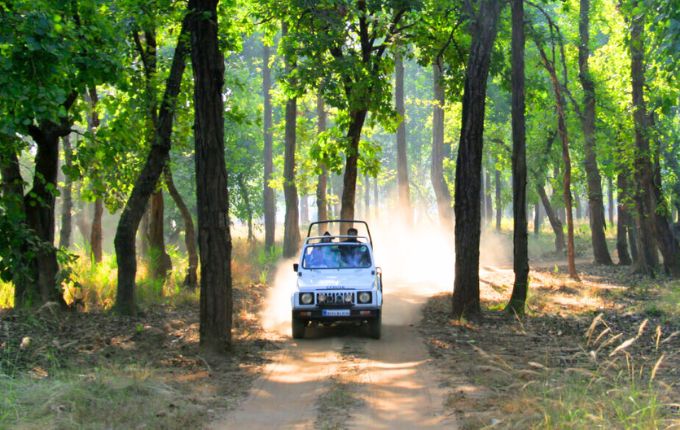
The jeep idles at the forest’s edge. You’re not looking for tigers this time, though they too roam these woods. This time, you are searching for something rarer—the distant call of a hornbill, a flash of the red panda’s tail, or perhaps the slow shuffle of a pangolin across laterite soil.
India’s safari experiences extend far beyond celebrity sightings of the Big Five. In desolate sanctuaries unsullied by tourists or shadowy mangrove labyrinths, wilderness unfolds as breathtaking flora and fauna that take you beyond the bucket list.
Come along for six Indian safaris that ask you to look closer, listen gentler, and find wonder in creatures whose names you may not know yet.
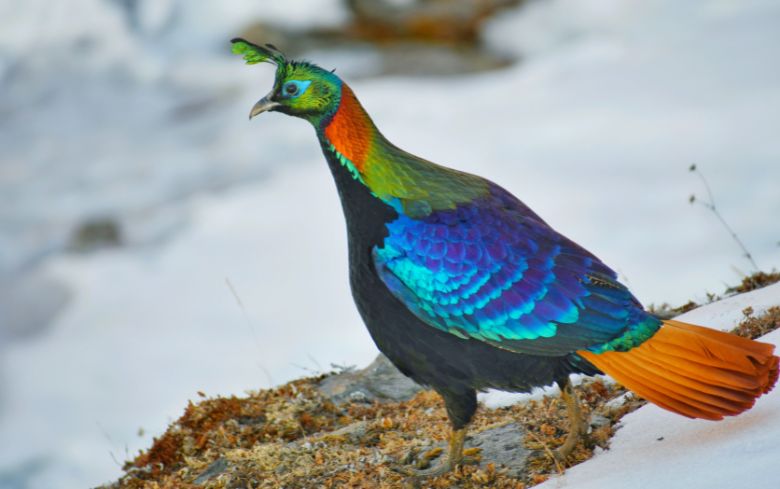
Dawn breaks are cinematic in the Mishmi Hills of Arunachal Pradesh. Sunbeams climb up scraggy conifers and mist clings to rhododendrons as the day’s first sounds make themselves known.
Among Asia’s more significant birding destinations, the Eaglenest Wildlife Sanctuary is home to over 500 avian species, including the critically endangered and strikingly coloured Bugun liocichla, discovered only in 2006. The terrain here is vertical theatre: subtropical forests in the valleys give way to temperate oaks and pines at higher elevations, creating ecological strata capable of hosting all kinds of feathered beings—from the flame-bellied Ward’s trogon to the rainbow-plumed Himalayan monal.
The safari here demands patience rather than speed. Trails wind through fern-carpeted undergrowth where red pandas may emerge at dusk, their russet fur catching the last light. The Kameng River valley below harbours clouded leopards and Asiatic golden cats: elusive, rarely seen, but always present. What makes Eaglenest extraordinary is its rawness–there are no paved safari circuits, no guaranteed sightings. Just you, the wild woods, and the possibility that around the next bend, a bird you’ve only seen in field guides might emerge in feather and flight.
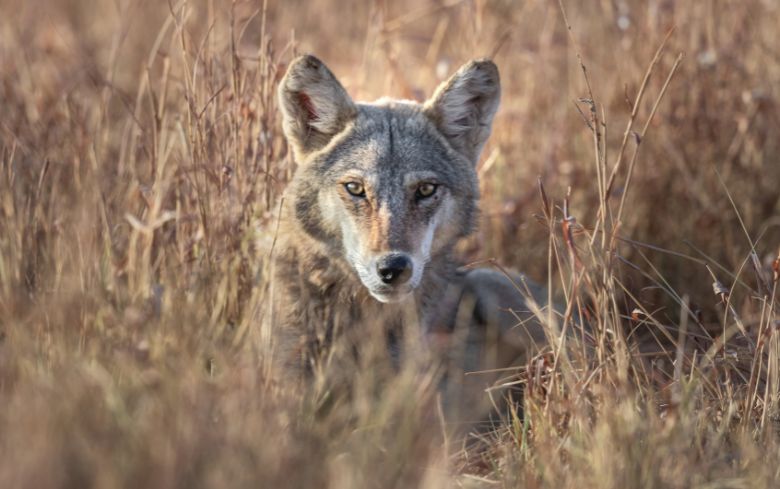
Kumbhalgarh reverses the usual safari equation. Here, wilderness encircles human heritage. This sanctuary wraps around the 15th-century Kumbhalgarh Fort—84 square kilometres of Aravalli forests creating a wildlife corridor between civilisation’s remnants.
The landscape mirrors Rajasthan’s scruffy good looks: rocky outcrops, thorny acacias, dhok trees, and seasonal streams that vanish by April. Wildlife excursions traverse terrains where sloth bears nose beneath stones for termites, chinkaras (Indian gazelle) bound across open ground, and the hyena’s shrieks echo through valleys at night. Jungle cats, civets, and nilgai (blue bulls) are also common, while leopards haunt the fort’s outer ramparts, occasionally leaving pugmarks on sandy roads.
But the real draw is the wolf population: Kumbhalgarh is among the few Indian sanctuaries where Indian grey wolves are reliably sighted. Unlike their forest-dwelling feline counterparts, wolves favour these scrubby ochre hills, hunting in small packs across terrain where concealment is minimal.
For those who fancy morning game drives that flow into afternoon fort visits, this is an experience unique to the land. Travellers staying at Club Mahindra Kumbhalgarh will find their quiet corner here, right in the heart of the Aravallis.
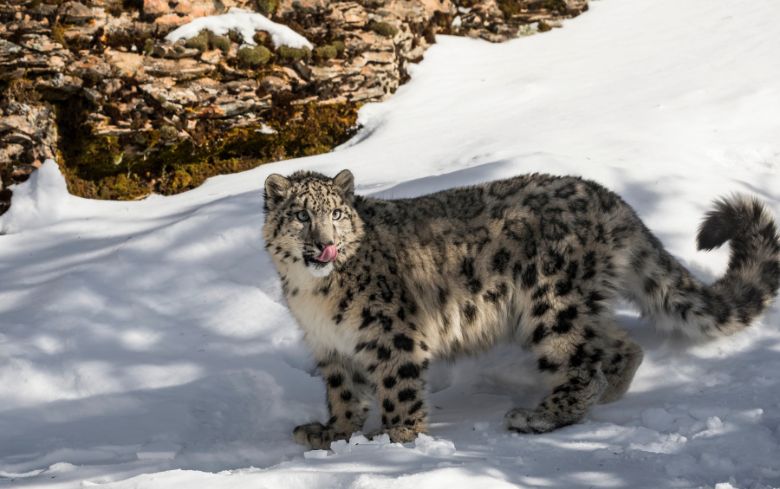
At 4,000 metres above sea level, breathing becomes an act of determination. But there’s great incentive to push your body at Ladakh’s Hemis National Park, India’s largest protected area.
Imagine a high-altitude desert extending across 4,400 square kilometres of rugged mountains, barren trails, juniper scrub, and frozen streams. The landscape seems inhospitable to life until you realise you’re in the snow leopard’s kingdom. Roughly 200 of these grey ghosts patrol these ridges—their population density among the world’s highest. Winter safaris, conducted between January and March, involve tracking pugmarks across snow and scanning razor-sharp cliffs through the crystalline air. Ibex cling to impossibly steep slopes, bharal (blue sheep) graze on alpine meadows, and Tibetan wolves traverse vast distances in search of prey.
Temperatures can plunge to minus 30 degrees Celsius, yet the reward is transcendent: a snow leopard materialising against snow-dusted rocks, its rosette-spocked coat the only colour in a monochrome world. This safari demands physical fitness and mental fortitude, but offers encounters with the world’s most mythical predator on its own uncompromising terms.
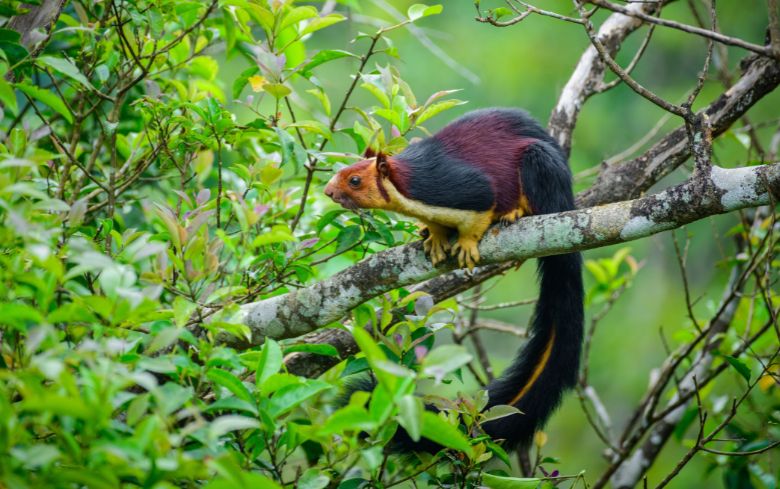
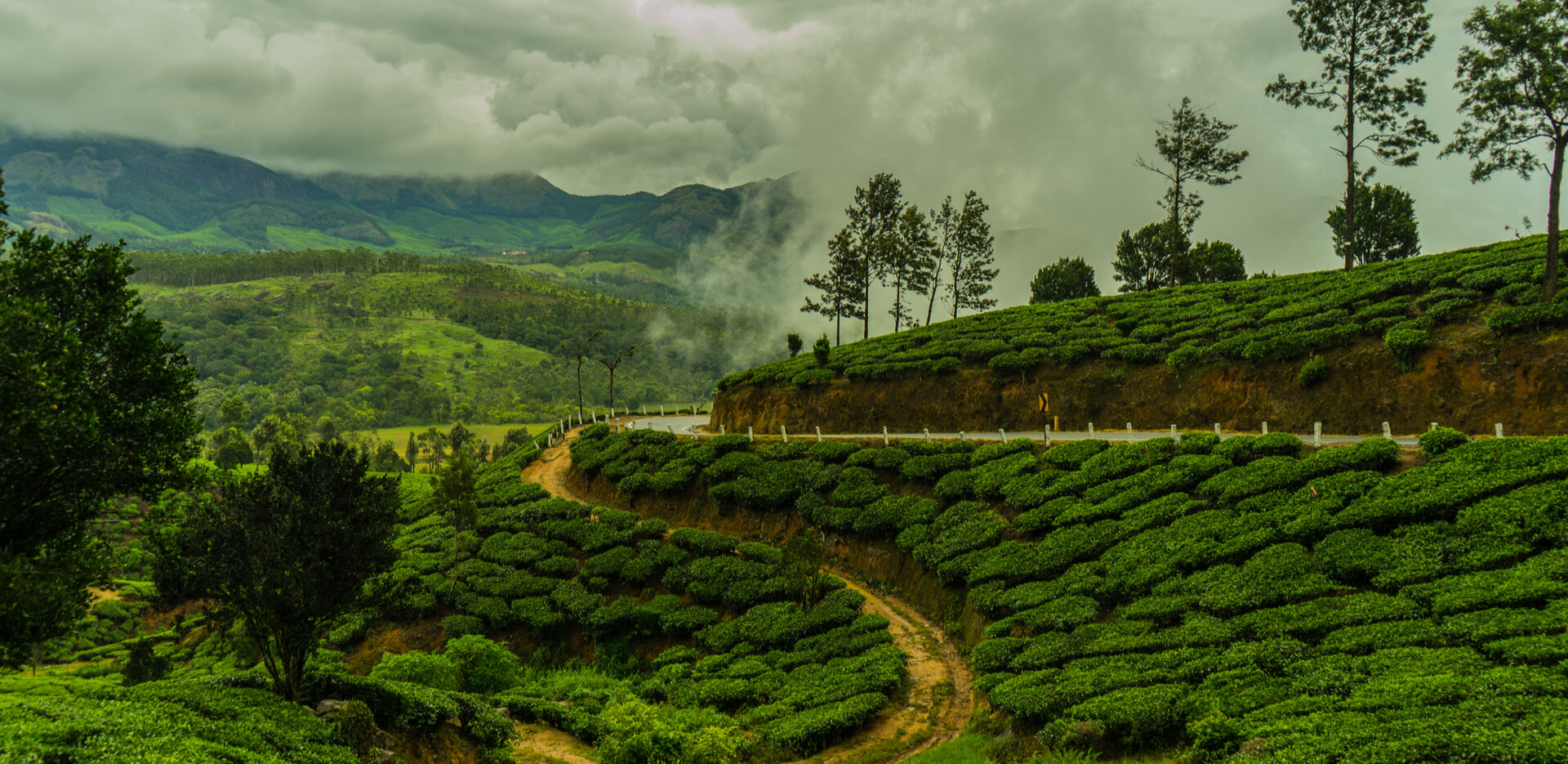
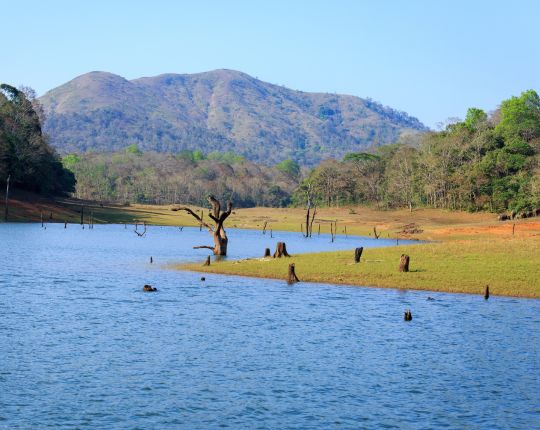
Sprawling across Kerala’s rain shadow region near Munnar, Chinnar presents wilderness in sepia tones.
Unlike the state’s famous evergreen forests, this 90-square-kilometre sanctuary is characterised by thorny scrub jungle, sandalwood groves, and deciduous trees that shed their leaves in summer—creating swathes of African savannah-like landscapes. The star residents are the grizzled giant squirrels: shaggy-furred, cat-sized rodents found nowhere else in Kerala, their black-and-white markings rendering them unmistakable as they leap between mahua trees. Excursions here unfold along the Chinnar River, where elephants wade through channels and gaur emerge from teak forests to graze in open fields. Spotted deer and sambar are abundant, but keep your eyes on the canopy for Malabar grey hornbills and on the rocky outcrops for mugger crocodiles basking in the afternoon sun. Open terrains make wildlife spotting relatively easier, and yet Chinnar receives a fraction of Kabini's crowds.
For families staying at Club Mahindra Munnar, this sanctuary offers an accessible brush with the wild—close enough for morning excursions, distinct enough for an atmospheric charm entirely distinct from the tea estates surrounding the resort.
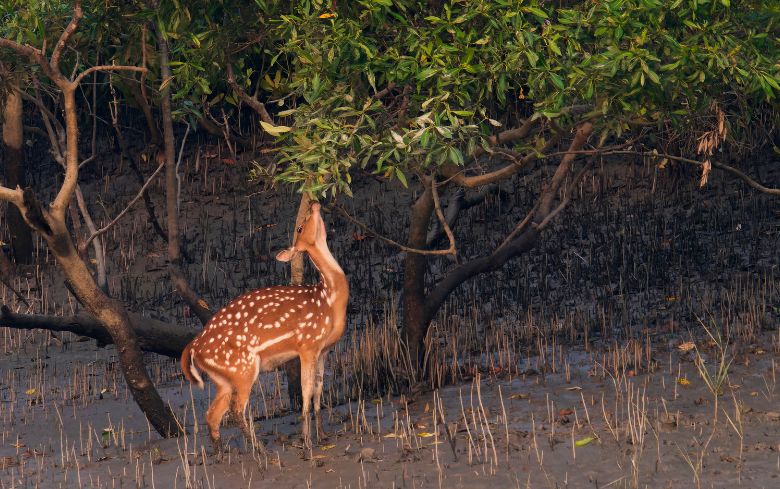
In the Sundarbans, your safari can resemble a riverine musical. Instead of jeep tracks, chatty tidal channels and revving boat engines; instead of dusty plains, rustling mangrove thickets rising from the saline waters of the Bay of Bengal. And then, deep blue silence.
Spanning India and Bangladesh, the UNESCO World Heritage Site is the world’s largest mangrove ecosystem and home to the Royal Bengal tiger. Spotting these marvellous creatures requires extraordinary fortune. The Royal Bengal Tiger has adapted to an amphibious existence, swimming between islands, hunting and even fishing in tidal zones—moving through their hostile ecosystem with swamp-specific stealth. What you may encounter are saltwater crocodiles lounging on mudbanks, Gangetic dolphins surfacing over the ash-blue waters of deeper channels, and spotted deer navigating roots that form natural walkways above water. Bon bibi, known to be the forest’s guardian spirit, is invoked by the honey-collectors and fishermen before they enter the woods. The forest itself is the revelation: filled with sundari trees, after which the region is named—their pneumatophores (breathing roots) jutting out of mud like wooden stalagmites.
On the banks of the world’s largest river delta where freshwater rivers meet ocean tides twice daily, the experience is salt-stung, mosquito-laden, and utterly unlike any other Indian safari. This is not wilderness you observe from a distance. You plunge into it, vulnerable and alert in equal measure.
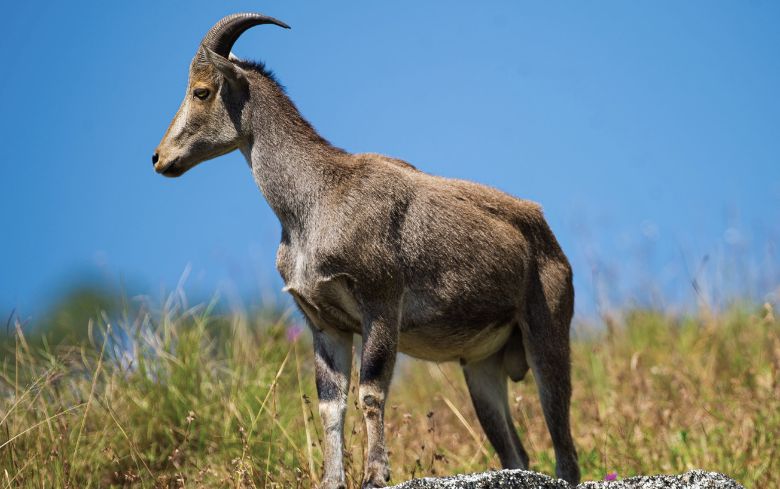
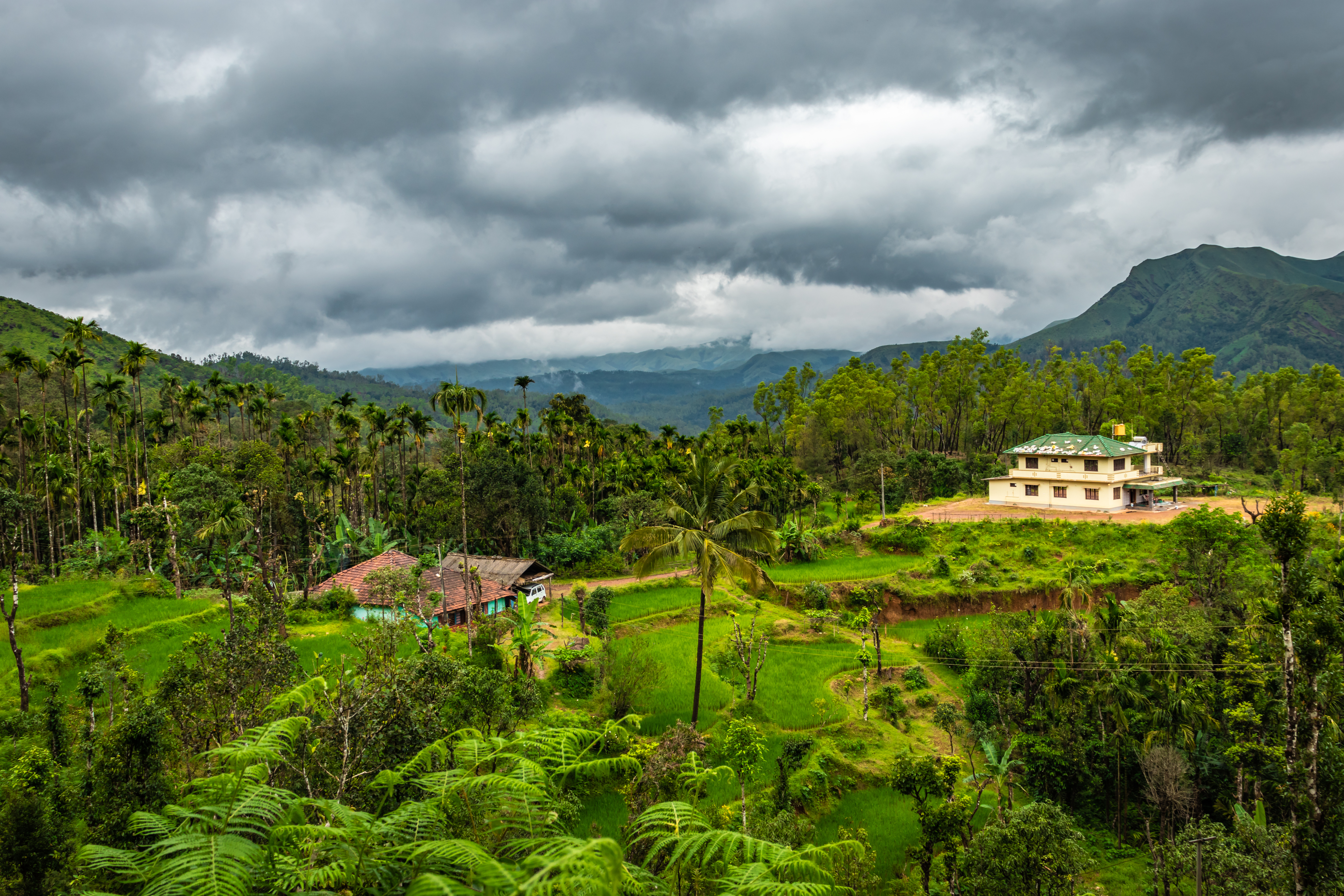
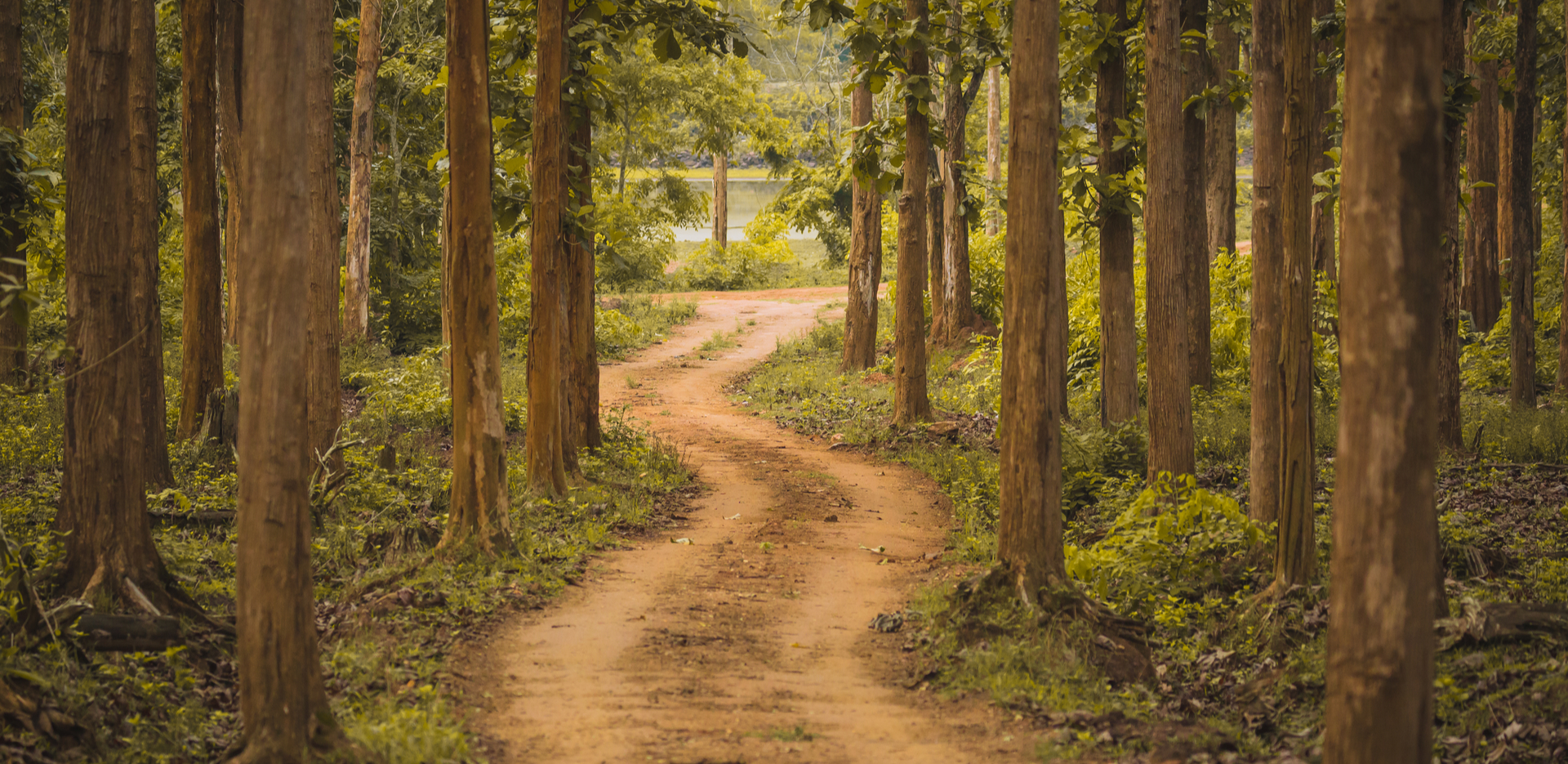
Mudumalai’s deciduous forests span 321 square kilometres at the tri-junction of Tamil Nadu, Kerala, and Karnataka, forming a vital part of the Nilgiri Biosphere Reserve.
Mudumalai translates to ‘ancient hill range’ in the indigenous tongue, and the landscape lives up to it: steep valleys, meandering streams, and vegetation that evolves with elevation. Despite hosting robust tiger and elephant populations—including an annual migration of over 600 elephants—it remains less frequented than its more celebrated neighbours, Bandipur and Nagarhole. The terrain undulates between moist deciduous valleys, rich in teak and rosewood, and higher, drier ground dominated by lantana and bamboo. Safaris often yield sightings of the Nilgiri tahr on rocky outcrops, dholes (wild dogs) moving in coordinated packs, and the Nilgiri marten, an adorable weasel known for its yellow throat patch. Four-horned antelope, found in few other Indian parks, browse in clearings at dawn, their silhouettes painted against tangerine skies.
The sanctuary’s position makes it ideal for families exploring the Nilgiris. Those based at Club Mahindra Derby Green in Ooty can easily incorporate Mudumalai into their hill station holiday, experiencing wilderness without sacrificing comfort.
Mahindra Holidays & Resorts India Ltd. (MHRIL), a part of Leisure and Hospitality sector of the Mahindra Group, offers quality family holidays primarily through vacation ownership memberships and brings to the industry values such as reliability, trust and customer satisfaction. Started in 1996, the company's flagship brand ‘Club Mahindra’, today has over 300,000 members , who can holiday at 140+ resorts in India and abroad.